Layout Design · 2026
UNICEF & icddr,b ECCD Books
Early childhood care and development books, laid out so every colour has a job.
- Layout Designer
- Asif Hossain
- Client
- UNICEF Bangladesh, icddr,b
- Project Manager
- Sketchboard Interactive
- Illustration
- Saba Islam
- Scope
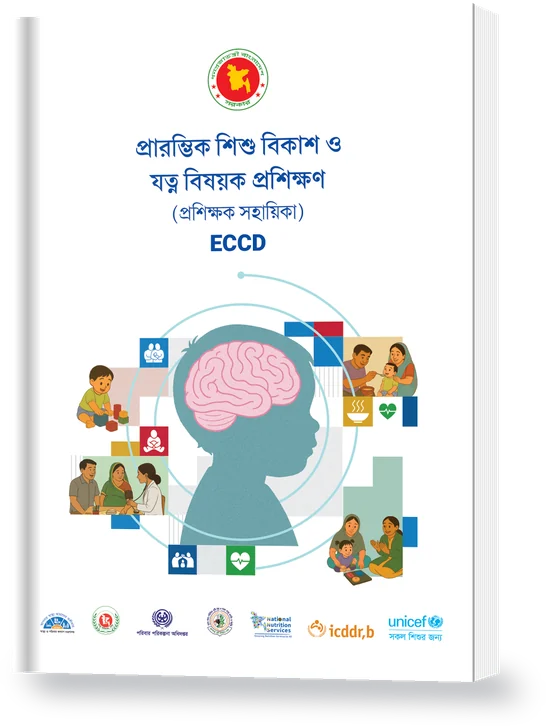
- Three training books
- Partners
- Ministry of Health and Family Welfare, Directorate General of Family Planning, National Nutrition Services
The brief
A book read in the middle of a conversation.
A child’s brain grows fastest in the first years, and in Bangladesh the people closest to those years are often the health workers a mother already visits. These three books train those workers, then stay in their hands during play sessions with mothers and children.
So I started with the reader, who is not sitting at a desk. A mother is waiting and a child is reaching for a toy. There are only seconds to find the right line, so the layout has to answer before anyone has to search.
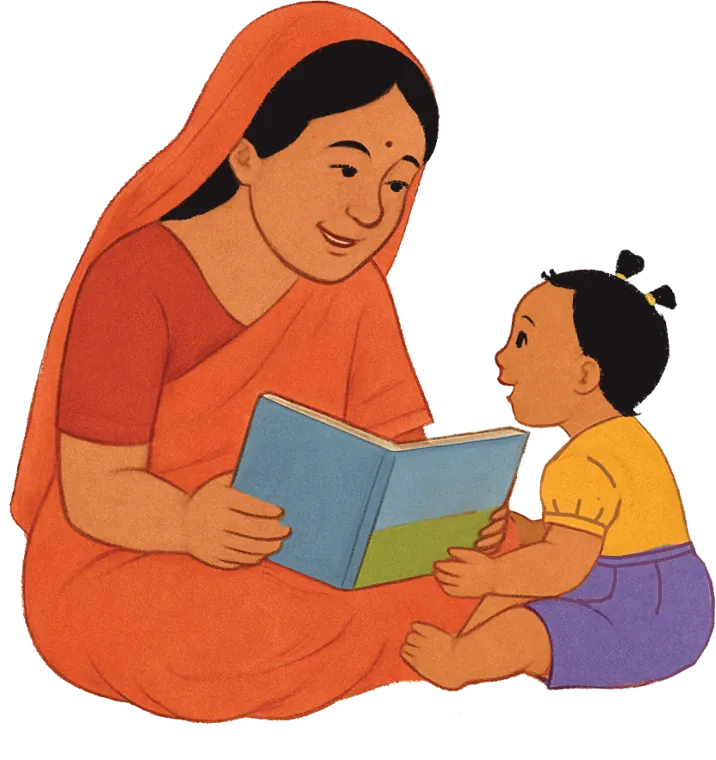
The set
Three books, three readers.
-
Module 1
Trainer’s guide · A4
For the person leading the training. Ten long sessions, so it needs to stay calm and easy to teach from.
-
Module 2
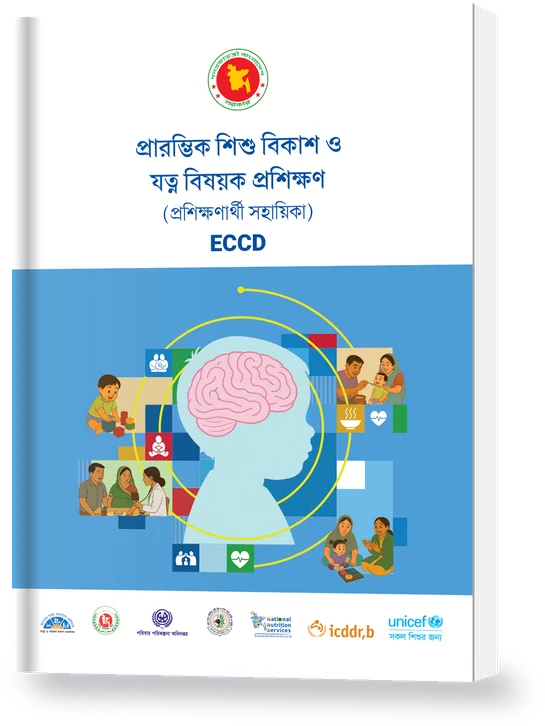
Trainee’s guide · A4
The same course from the other side of the room. It shares Module 1’s system, so both books read as one.
-
Module 3
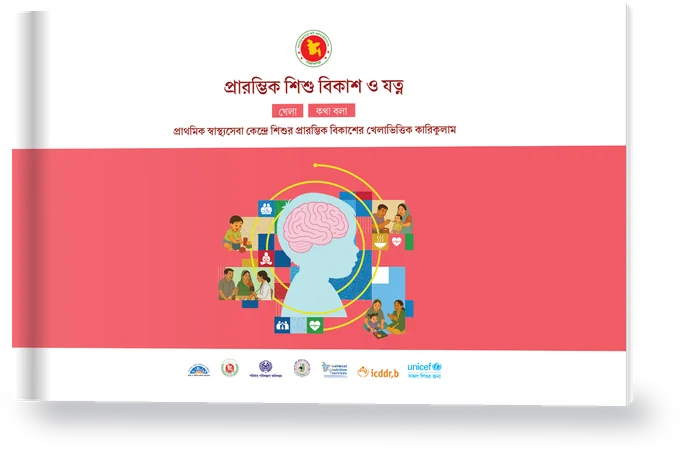
Session guide · Landscape
For the health worker during a live session. It turns on its side so one whole session plan is open at a glance.
The palette
Why these colours.
Module 3 runs on five pale tints and one loud cover. Pale tints keep small black Bangla text sharp, even on a modest office print. Each one is far enough from its neighbour to tell apart at a glance. The bar shows how much of Module 3 each colour covers.
Pink
#FAD1DEThe biggest area because it holds the main work. It feels warm and caring, so long instructions never look stern.
Lime
#DFEBAFThe brightest tint, used for the first thing to find: the age and the materials.
Blue
#D6EFF4Cool and light, it steps back so the toys and rhymes read as a side column.
Mint
#D6EDE2Keeps talking apart from doing, so speech never gets lost in the steps.
Grey
#EEEFEFThe quietest colour for the note that repeats on every page.
Coral
#F15B67The one loud colour, kept for Module 3’s cover so the book is easy to spot on a busy desk.
Module 1 keeps it simpler
- Lime
#DEEAAEfor topic headers - Grey
#EAEAEBfor session overviews - Amber
#FEE19Ffor note boxes
Type
One Bangla family, three levels.
Module 3 runs on July alone. Three levels are enough: find the session, find the column, read the step. Fewer levels also mean less to think about when a child is pulling at the page.
 20 to 30 pt bold · session
 13 pt bold · column
 12 pt regular · step
Module 1
One long book, one rhythm.
A long book stays calm when every page type behaves the same way. A trainer can flip to any page and know what part of a session they are in from the shape of the page alone.
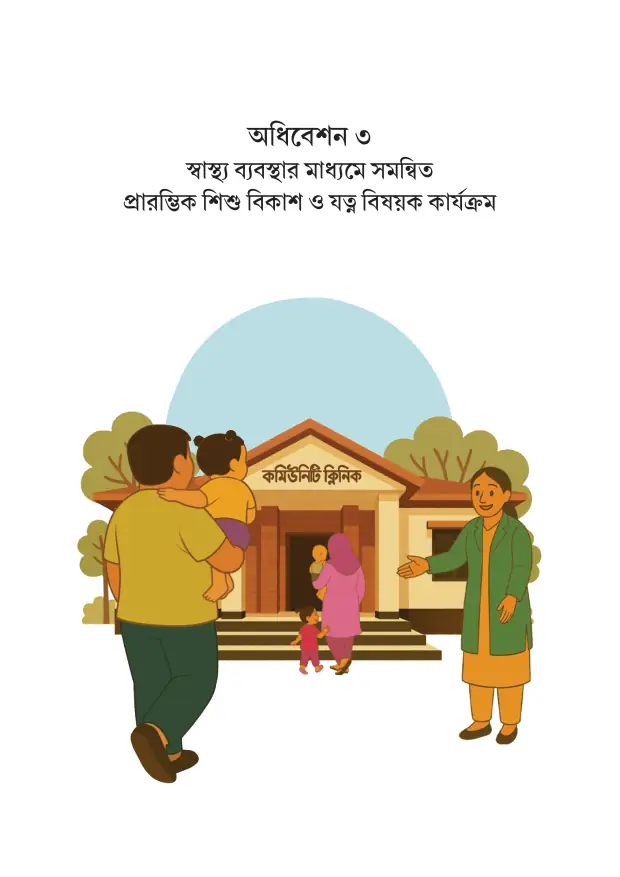 OpenerOne big picture marks a new session.
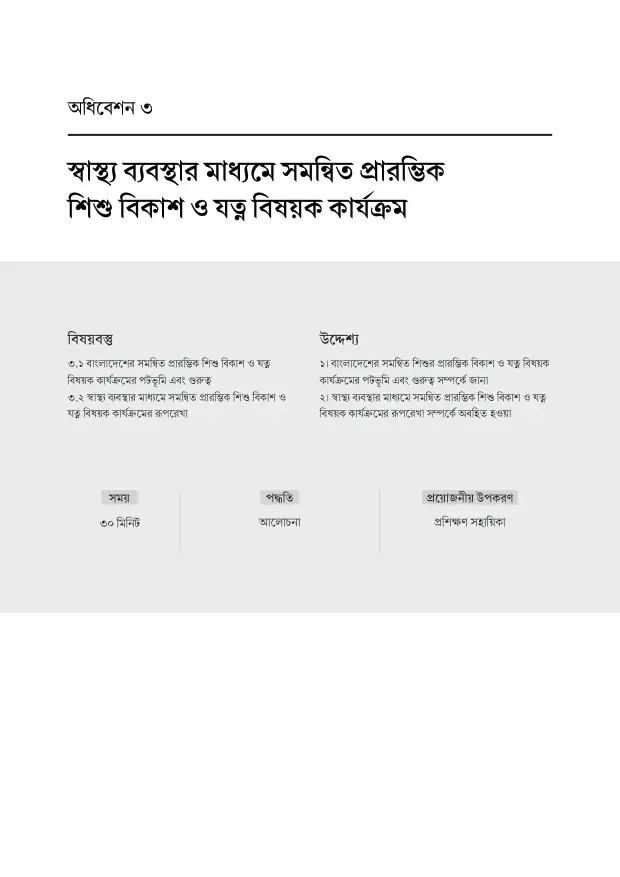 OverviewA grey panel holds the topics, aims and time.
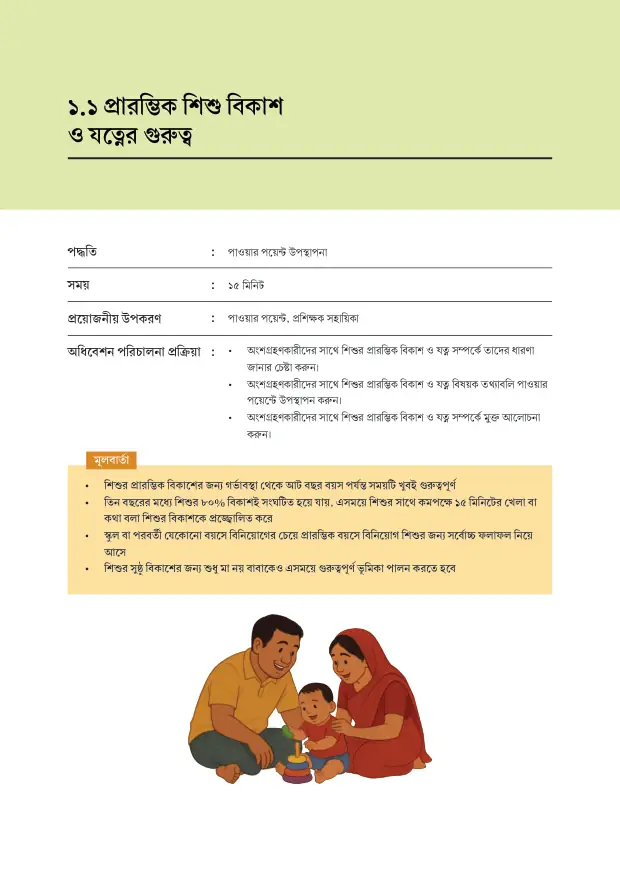 TopicA lime header, the method, then an amber note.
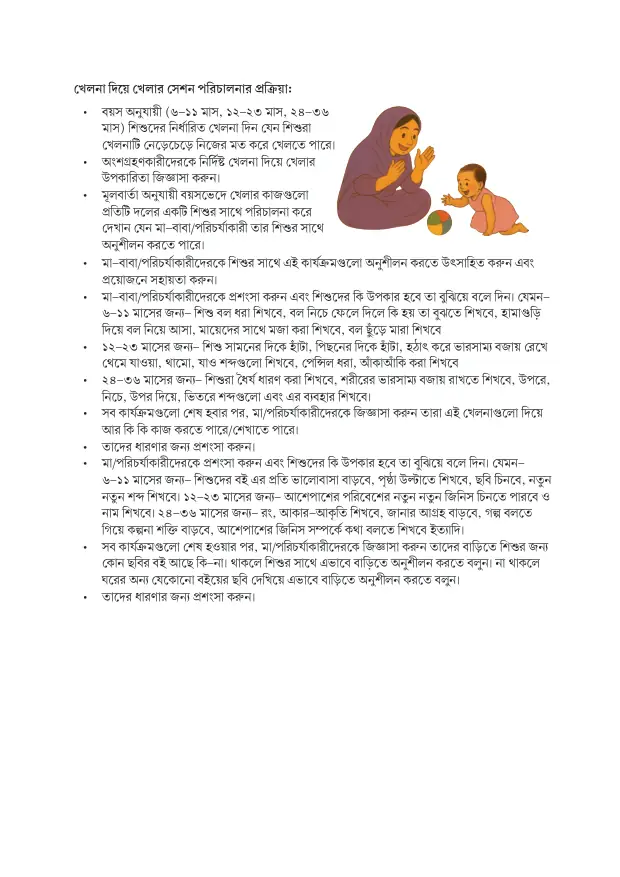 BodyText runs clean, and pictures give it air.
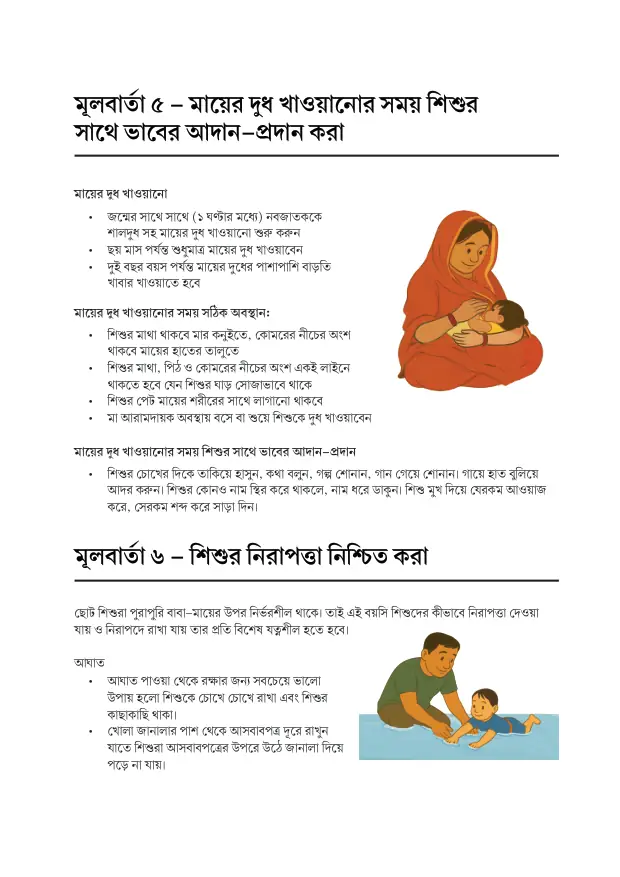 Key messageTwelve messages, each with its own bold title.
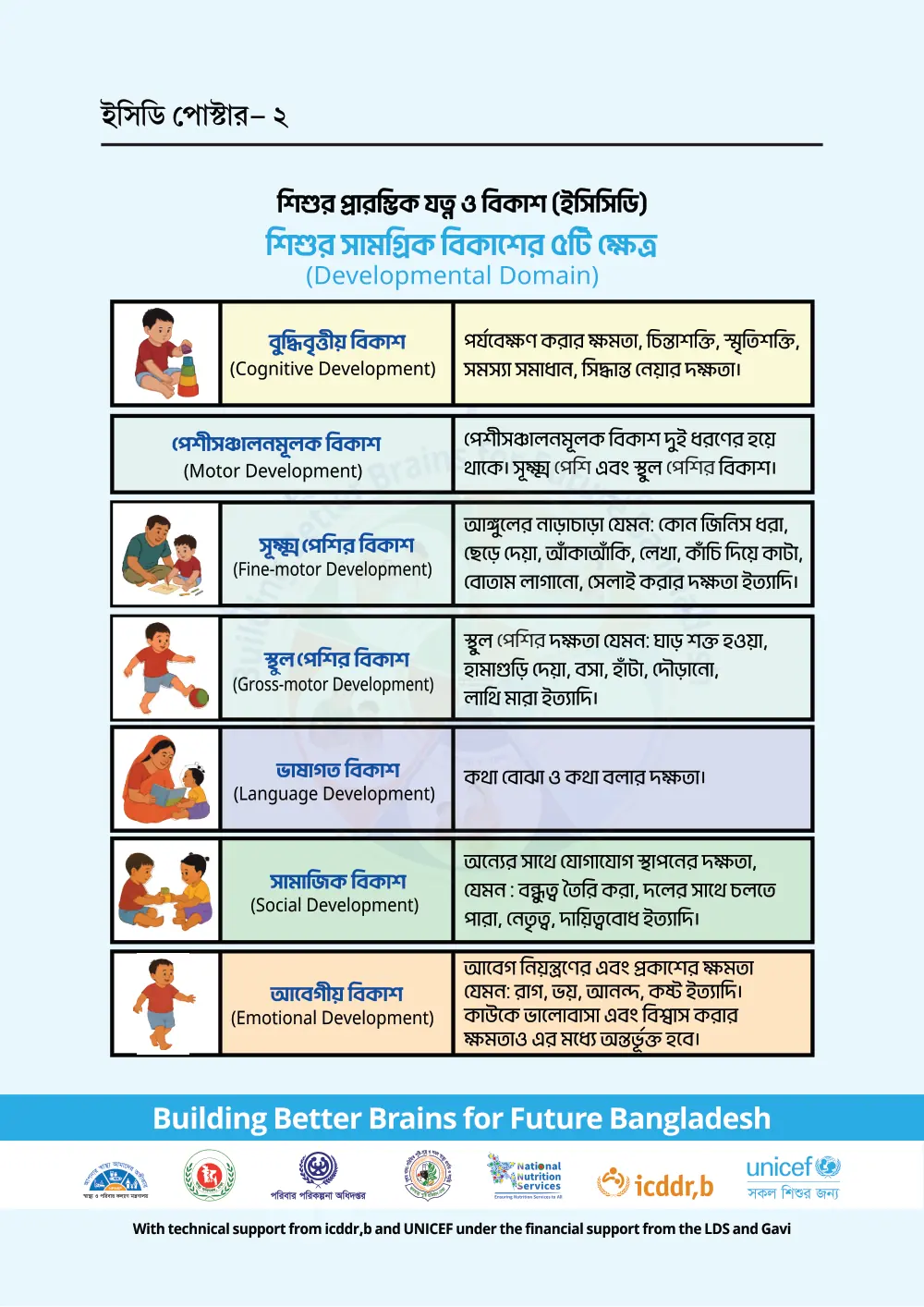 PosterThe whole idea on one wall-ready page.
- 10training sessions
- 6play-based sessions
- 12key messages
- 4posters
Module 3
One page, five colours.
This is the page a health worker has open during a session. Every colour labels one kind of content, and it never changes from session to session. With a little practice, the reader stops reading labels and starts reading colours.
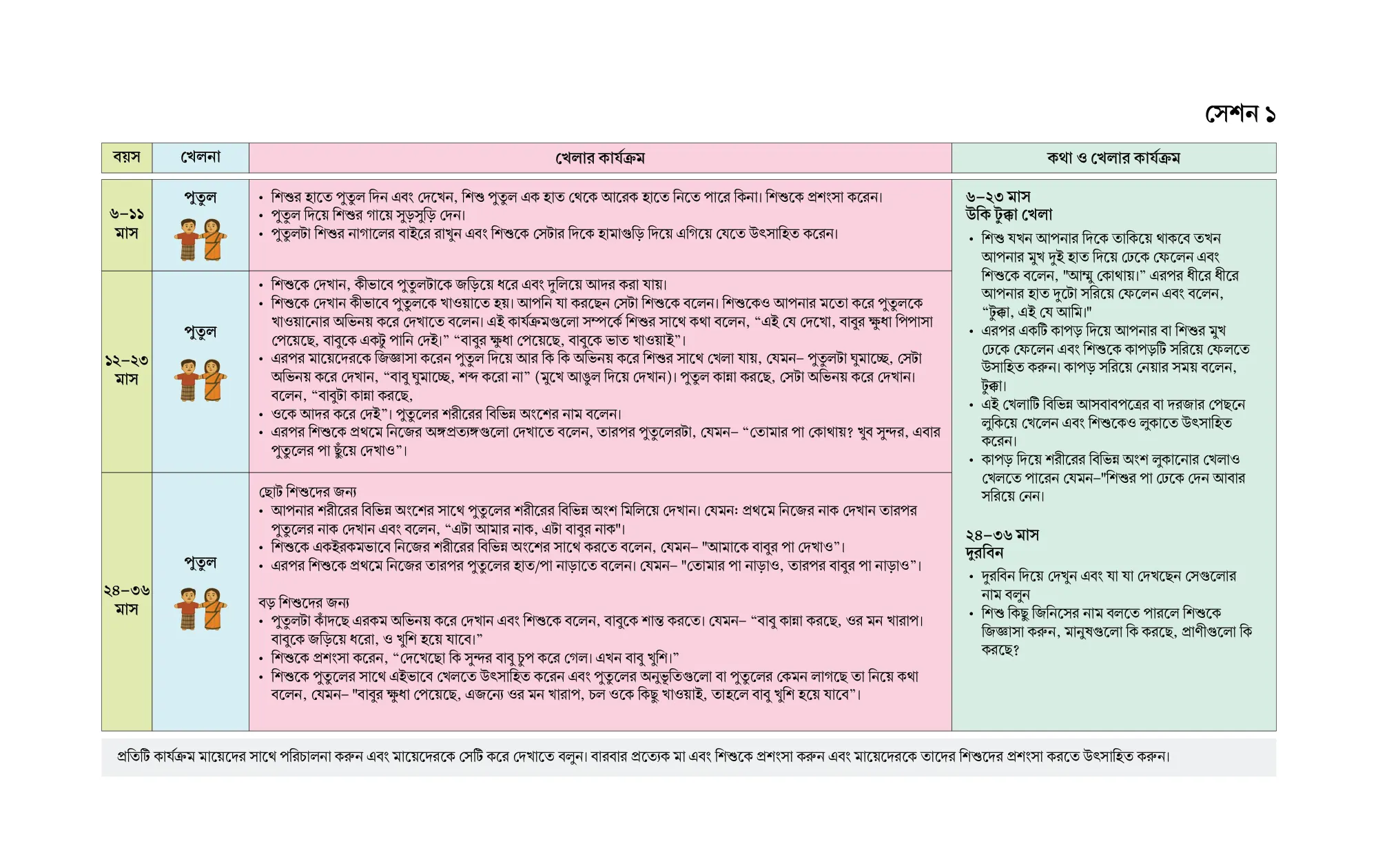 1
2
3
4
5
- 1
Lime
The child’s age. The first thing to find.
- 2
Blue
The toy or rhyme to pick up.
- 3
Pink
What to do, step by step.
- 4
Grey
One reminder, always on the last line.
- 5
Mint
What to say while playing.
Every session, the same rhythm.
Each session runs in the same order: the book and a rhyme, then the toys and talk-and-play, then a review. Here is the whole book at a glance.
Room to breathe
The pictures do the resting.
Long Bangla text is tiring. Saba Islam’s warm illustrations break it up and show real homes and real families, so I gave them clean white space and never boxed them in.



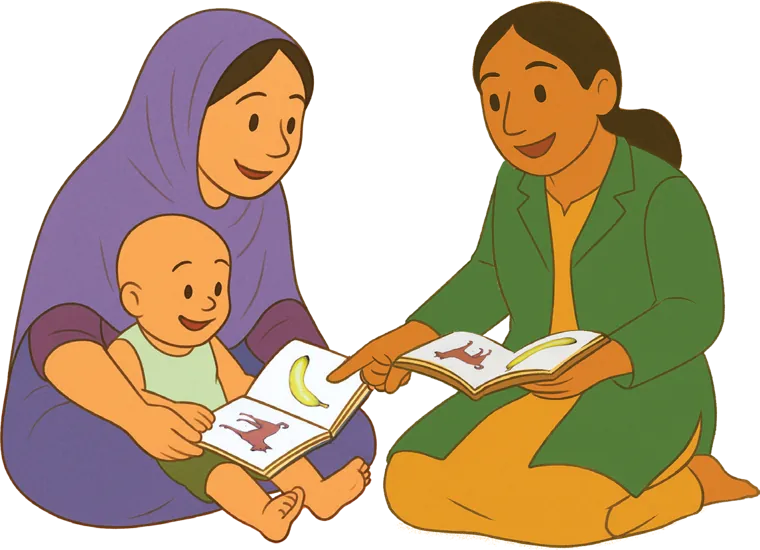

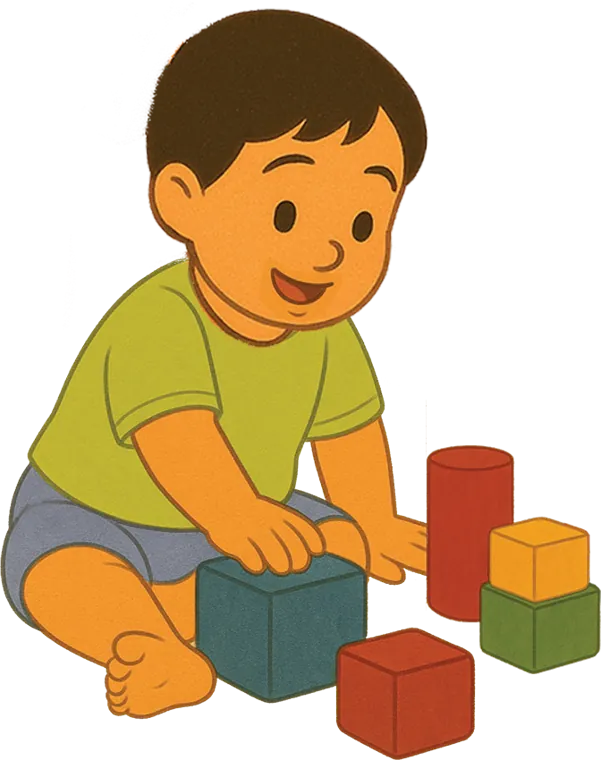
Illustration: Saba Islam
Inside the books
A look through all three.

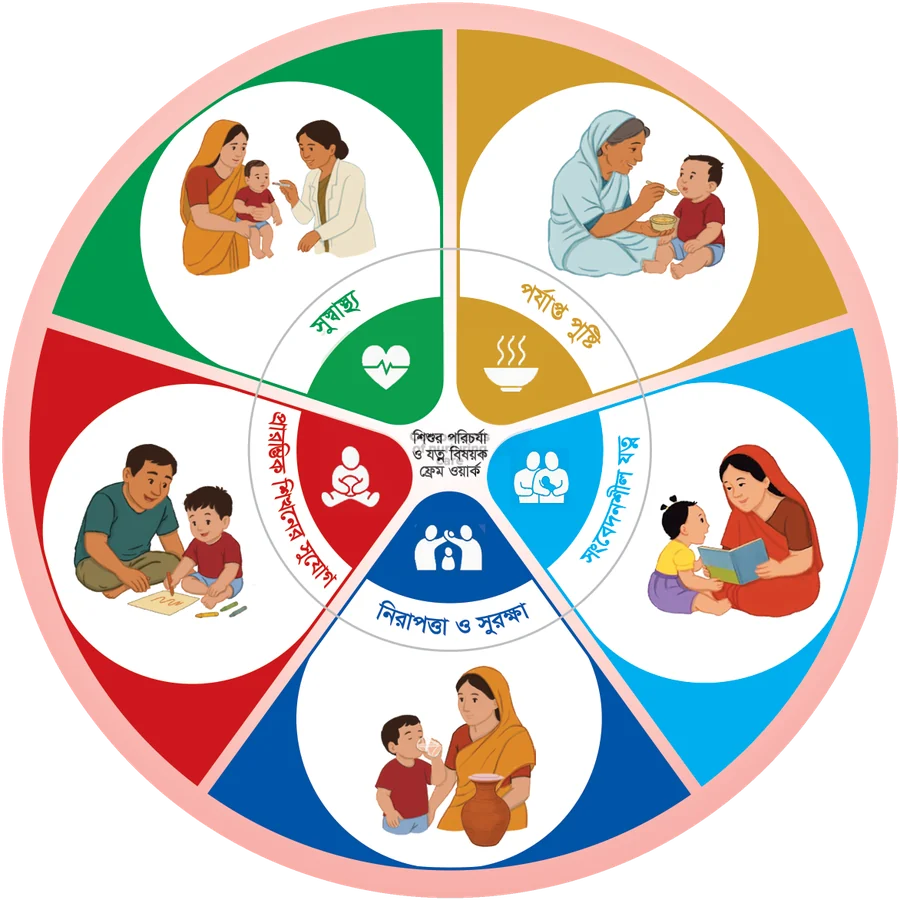
The big picture
Clear pages for better beginnings.
Everything a young child needs sits in one wheel on the back of Module 3. Every layout before it was made to help someone deliver that care.