Tire Wear Particles | Case Study
Visualizing Sub-Micron Weathering, Hypothesized Internal Domains & Coupled Chemical Exchange in Aquatic Ecosystems
Info
- Researcher
- Professor Navid B. SalehCivil, Architectural and Environmental EngineeringUniversity of Texas, Austin
- Art Direction & Visual Design
- Asif Hossain
- Year
- 2026
Project Overview & Context
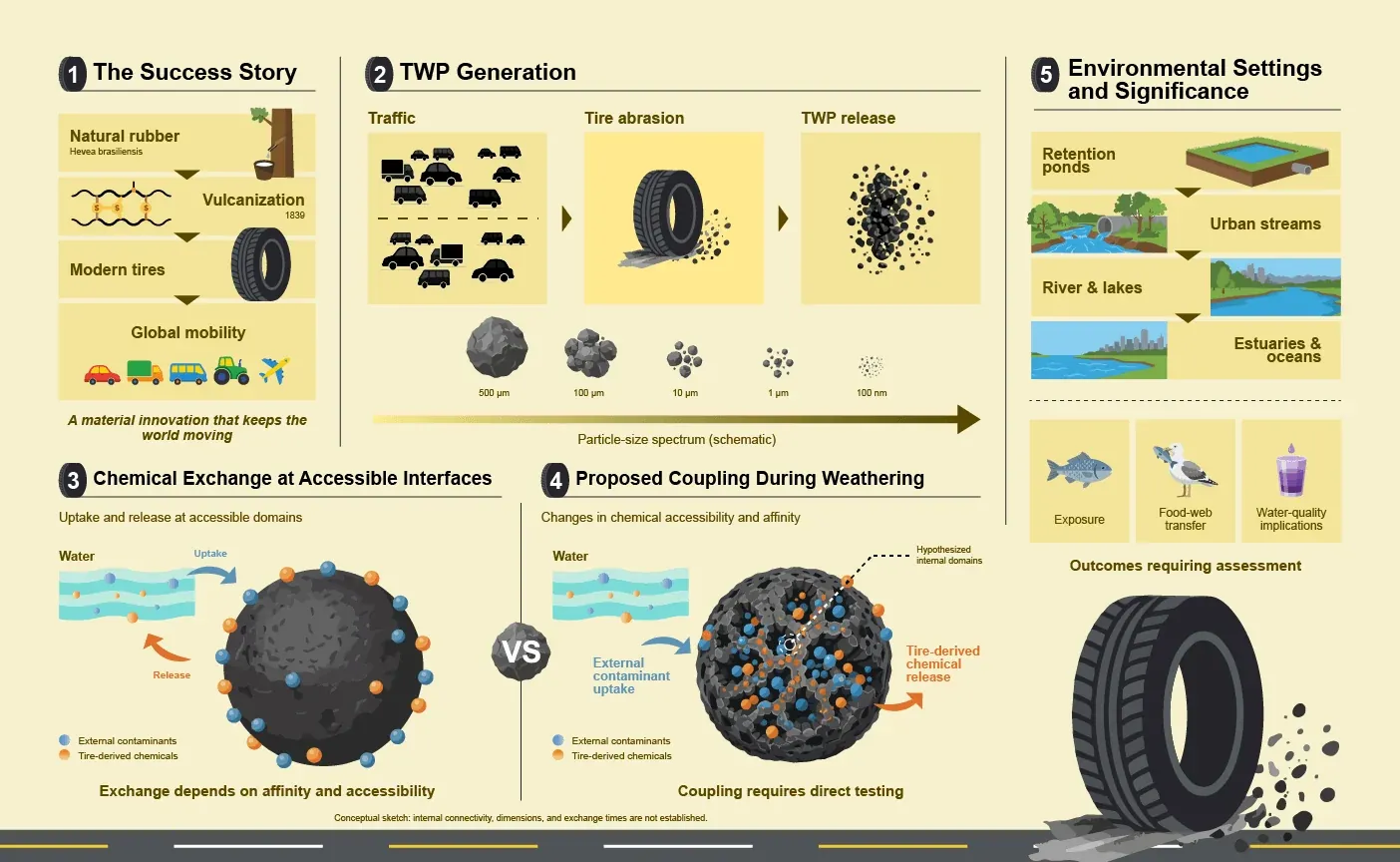
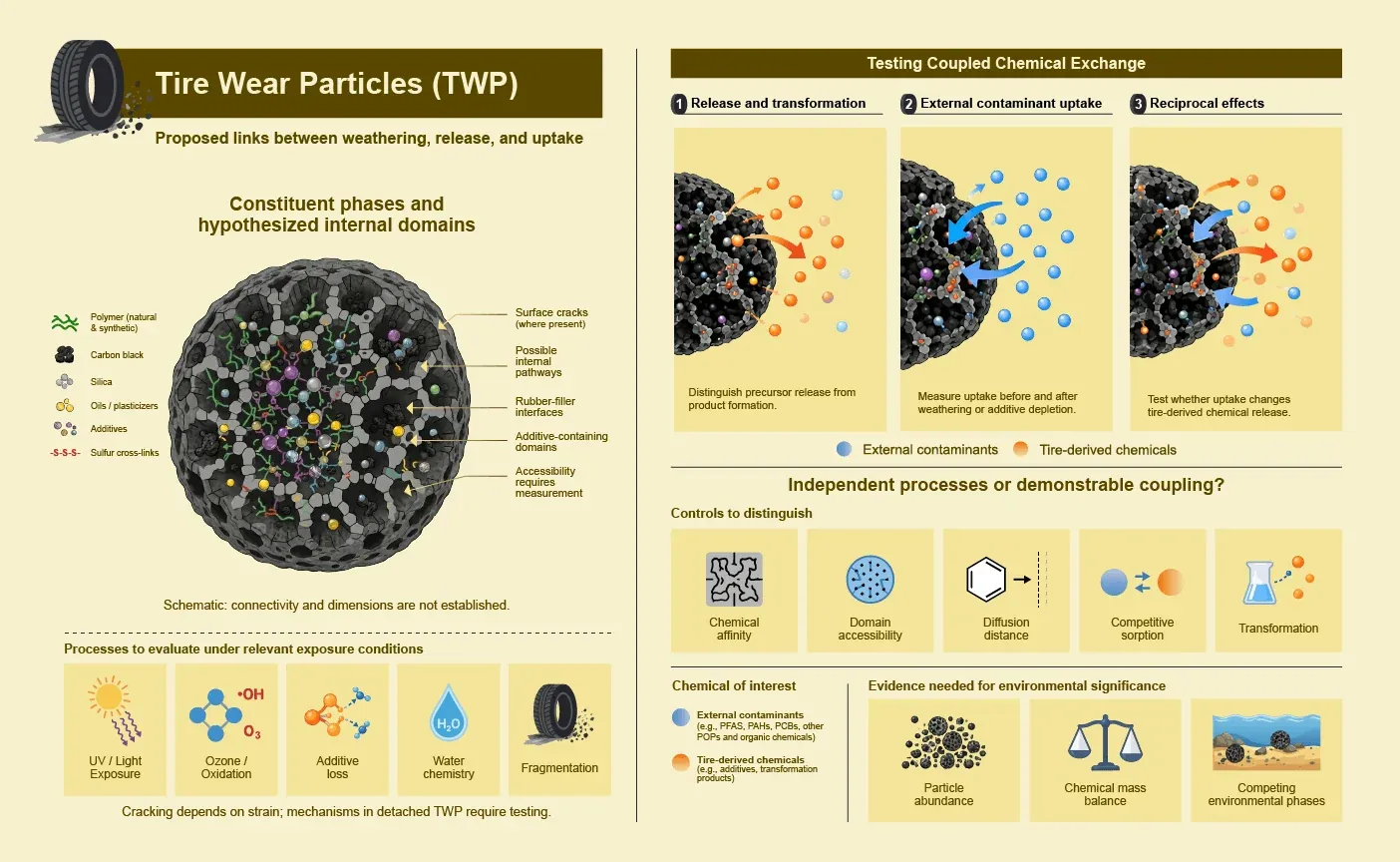
Modern tires keep global mobility moving, but road friction constantly sheds microscopic Tire Wear Particles (TWP) into our waterways. Created in collaboration with Prof. Navid B. Saleh, this 2-part infographic series translates complex environmental chemistry into a cohesive visual system—connecting the macro environmental lifecycle of TWP with a laboratory blueprint for testing sub-micron chemical exchange.
Challenge
- Bridging the Scale Gap: Guiding the viewer seamlessly from everyday highway traffic down to 100 nm nanoparticles within a single unified layout.
- Visualizing Unproven Hypotheses: The internal pore connectivity of weathered tire particles is not yet established. We had to illustrate hypothesized internal domains clearly enough to show how chemical coupling could work, while signaling that these mechanisms require direct lab testing rather than presenting them as settled fact.
Target Audience & Goals
Built for environmental scientists, journal editors, and grant reviewers to grasp complex chemical weathering hypotheses and experimental testing protocols at a glance.
Design System
- Warm Editorial Palette: Replaced sterile academic white backgrounds with warm cream and ochre surfaces so the dark carbon-black particles pop with immediate contrast.
- Dual-Tone Chemical Coding: Sky Blue represents external contaminants (PFAS, PAHs, PCBs) moving into the particle; Vibrant Orange represents tire-derived additives leaching out.
- 3D vs. 2D Hierarchy: Reserved textured 3D porous cutaways strictly for the hero TWP spheres to expose their internal architecture, keeping surrounding context in flat 2D vectors so it never competes for attention.
- Wayfinding: Numbered charcoal badges and directional arrows guide the eye cleanly across non-linear grids.